The Most Iconic Knoll Chairs: A Guide for Interior Designers and Specifiers

Posted by Default Admin (02 October 2026)

The most iconic Knoll chairs are recognised for more than their appearance. They represent a particular approach to modern furniture, where proportion, structure, material and the needs of the room are resolved as one design problem. For interior designers, architects, FF&E designers and procurement teams, understanding that background helps make better selections for residential, hospitality, commercial and marine projects.

Knoll’s catalogue includes influential work by Ludwig Mies van der Rohe, Eero Saarinen, Harry Bertoia, Florence Knoll, Marcel Breuer and other important designers. Some chairs are sculptural statement pieces, while others are practical work, dining or conference seating. The right choice depends on the setting, dimensions, upholstery, use, access and project programme, not simply on how recognisable the chair may be.

This guide explains the history and character of the principal designs, the details that affect specification and the questions worth answering before a quotation or order is placed. It also explains how a specialist Trade Furniture and Lighting Supplier can help protect design intent from the first product schedule through to delivery and installation.
Why Knoll chairs remain influential

Knoll’s significance comes from the relationship between architecture and furniture. The company’s planning tradition, associated particularly with Florence Knoll, treated furniture as part of the wider space rather than as an isolated purchase. Proportion, circulation, visual order and the way a person uses a room all formed part of the design decision.

That approach still matters in current projects. A chair may need to work around a dining table, create a comfortable waiting area, support focused conversation or provide a distinctive focal point in a private interior. Its frame, seat height, arm profile and upholstery can affect how easily it fits beside tables, desks, walls and circulation routes.

The designs also show contrasting interpretations of modernism. Mies van der Rohe used disciplined structure and refined materials. Saarinen introduced a softer, more sculptural language. Bertoia explored the possibilities of welded metal, while Florence Knoll developed restrained upholstered forms that reflected the geometry of modern architecture. These differences give designers a useful range rather than a single visual formula.

The Barcelona Chair: structured luxury and architectural presence

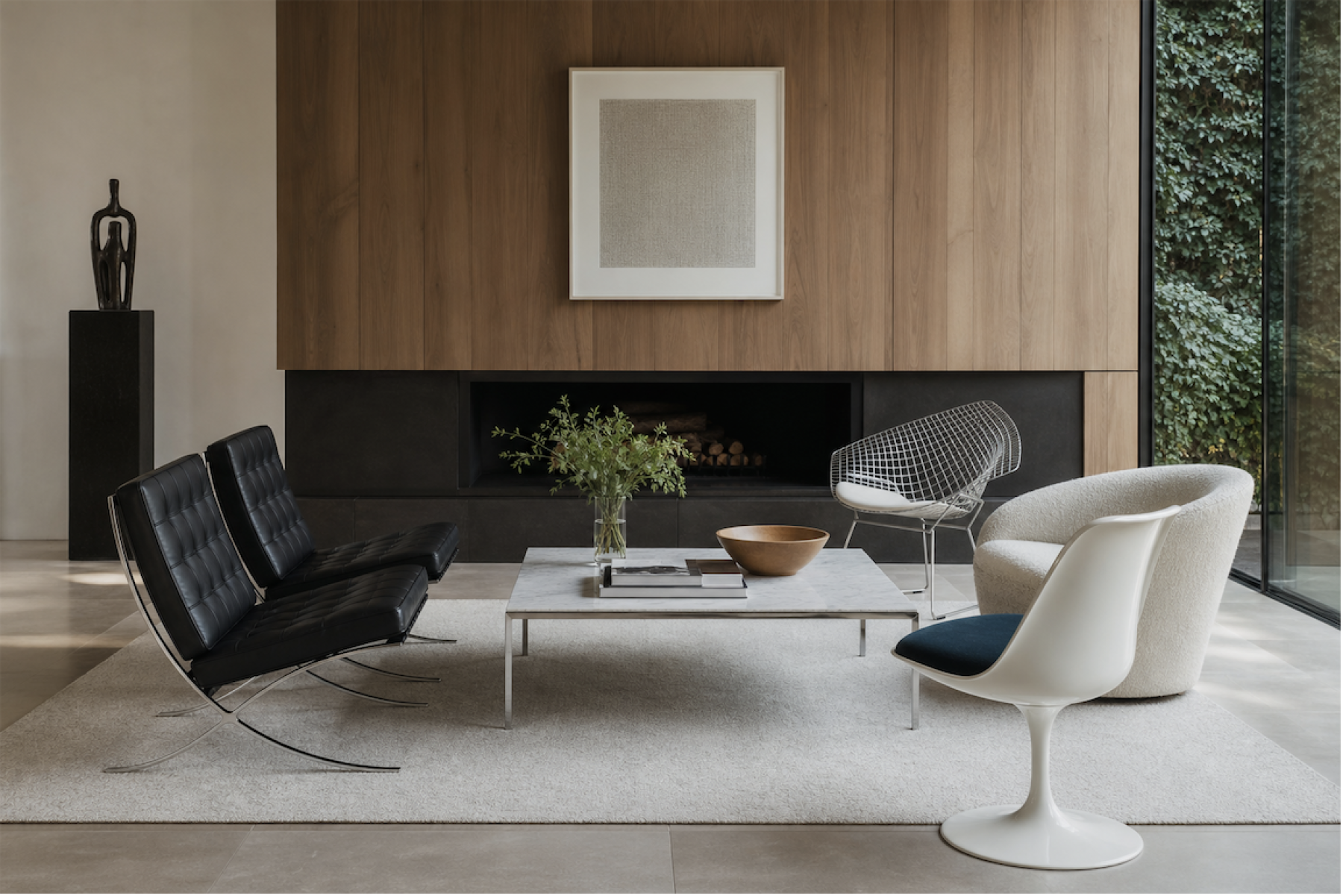
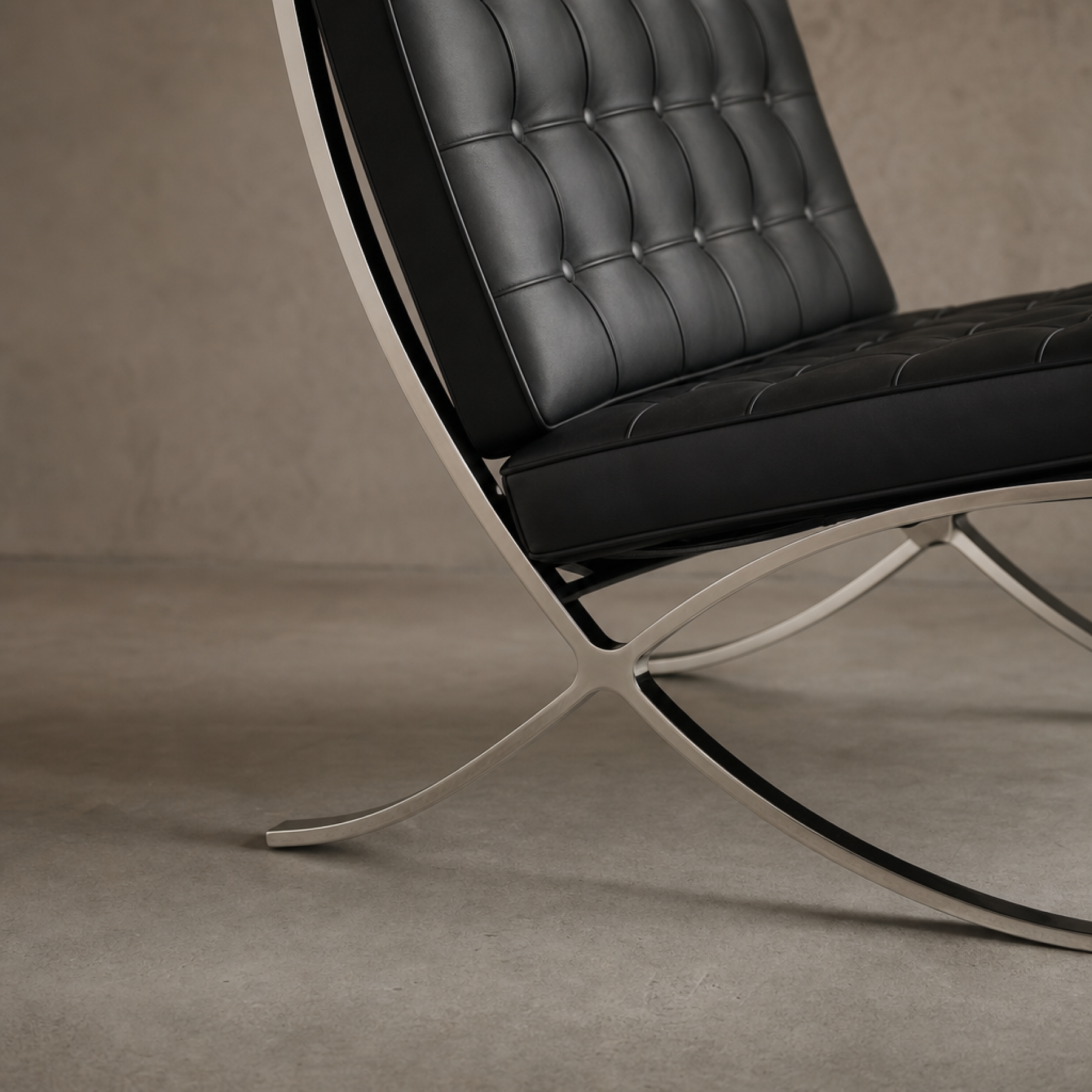
The Barcelona Chair, designed by Ludwig Mies van der Rohe with Lilly Reich for the 1929 International Exposition in Barcelona, is one of the best-known chairs in modern furniture history. Its separated cushions, crossing frame and carefully controlled proportions create a formal profile that can hold attention without relying on ornament.

Its strength in a project is visual clarity. The chair can define a reception area, private sitting room, executive setting or hospitality lounge, particularly where the surrounding architecture benefits from strong lines and open space. It is not a casual chair in character, so its suitability depends on the atmosphere required and the expected pattern of use.

Specification requires attention to leather selection, frame finish, cushion construction and the relationship between chair and footstool. The available footprint must also be checked with circulation space around it. A pair may create a balanced arrangement, but only if the room allows people to approach, sit and move away comfortably.

The Womb Chair: comfort with a sculptural silhouette

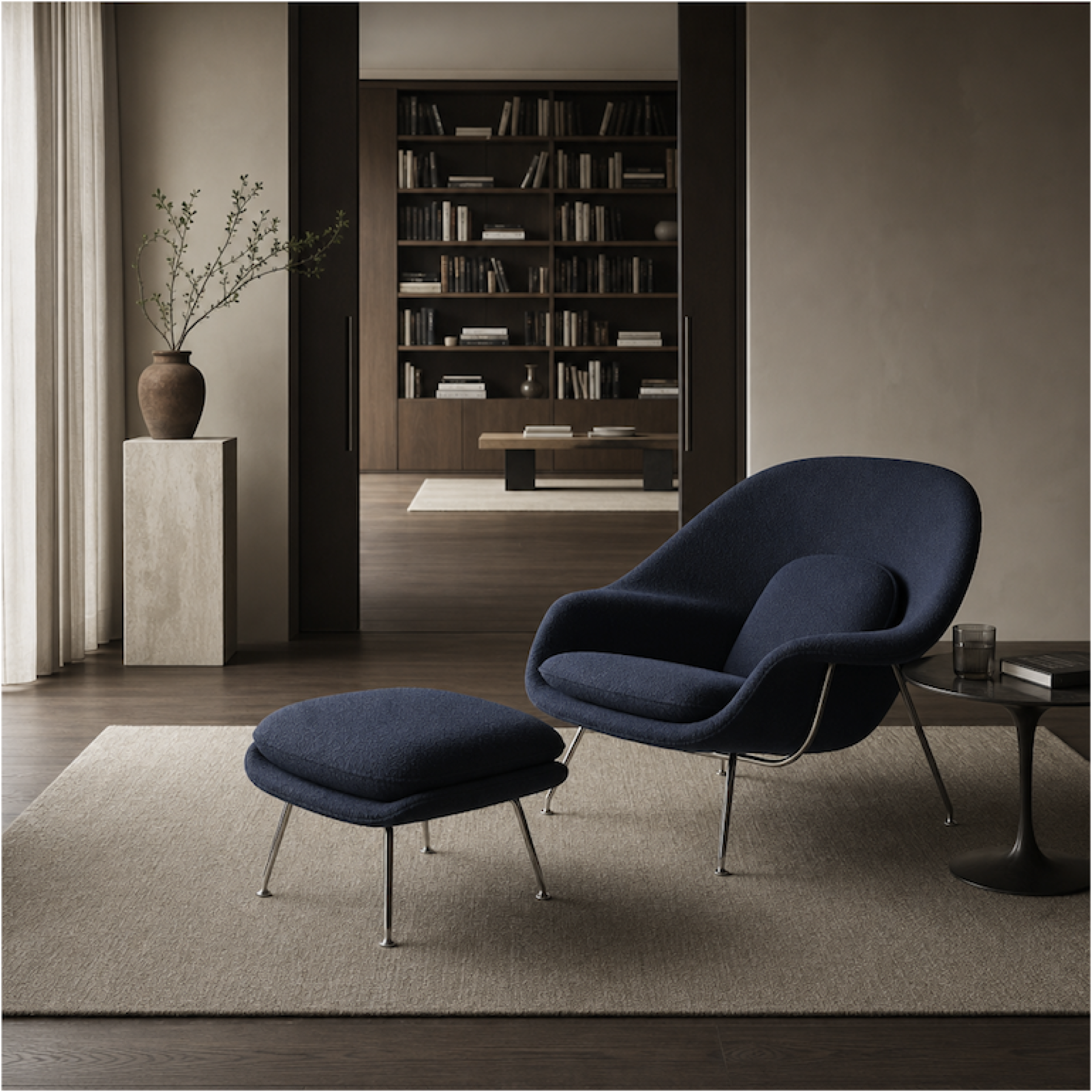
Eero Saarinen designed the Womb Chair in 1948 at Florence Knoll’s request for a chair in which someone could relax in several positions. Its enveloping form and loose cushions give it a noticeably different character from more upright lounge seating. The design supports reading, conversation and informal relaxation rather than a single prescribed posture.

It works particularly well when a project needs a softer counterpoint to architectural furniture. In a bedroom, private library, lounge or quiet hospitality setting, the chair can provide a sense of retreat. Its broad form needs room around it, and the position of a matching ottoman should be planned at the same time rather than added after the layout is fixed.

Upholstery is a practical as well as aesthetic decision. Colour, texture, cleanability and seam details can alter the chair’s visual weight. For a busy commercial or hospitality scheme, the selected fabric must be checked against the manufacturer’s performance information and the client’s maintenance expectations.

Florence Knoll seating: restrained geometry for flexible interiors

Florence Knoll’s seating designs are closely associated with architectural proportion, disciplined lines and quiet precision. The Florence Knoll Sofa and related lounge pieces have a composed, rectangular profile that can support a complete interior scheme without dictating every other element in the room.

The Florence Knoll Lounge Chair is useful where a project needs individual seating with a formal but comfortable appearance. It can sit beside a sofa, accompany a coffee table or form part of a workplace meeting setting. Its restrained shape often makes it easier to coordinate with tables, credenzas, lighting and other pieces from different collections.

Florence Knoll’s wider contribution also includes the planning principles behind the company. Her work connected furniture selection with the organisation of the interior, which remains relevant when a designer is coordinating several brands, bespoke pieces and lighting suppliers. A chair should be reviewed as part of the room’s complete specification, not in isolation.

Bertoia chairs: the expressive potential of metal

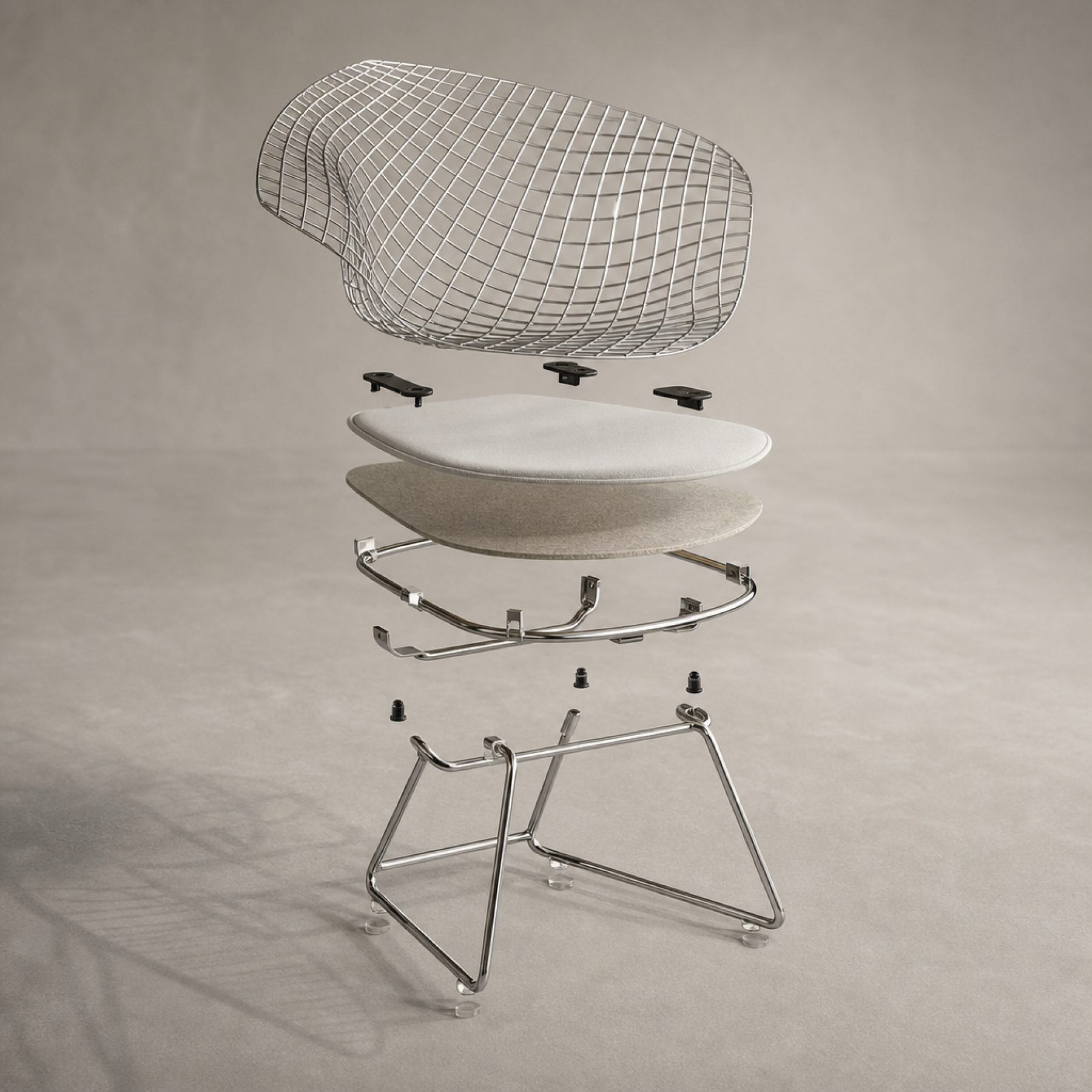
Harry Bertoia’s chairs demonstrate how an industrial material can produce a light, open and highly recognisable form. The Diamond Chair uses a sculptural wire grid that appears airy while providing a strong visual presence. The Bertoia Side Chair applies related principles to a more compact format suitable for dining, meeting and occasional seating.

The Diamond Chair can create a memorable accent in a residential lounge, gallery-like setting, reception space or carefully planned hospitality area. The Side Chair is generally easier to place around a table or desk because of its smaller footprint. Both designs can work with upholstery options that change the level of comfort, acoustic softness and visual density.

When specifying wire seating, review the contact points, floor protection and cleaning requirements. Upholstered pads may improve comfort but can also affect seat height and the relationship with a table. If several chairs are required, confirm whether the chosen finish and upholstery are available in the required quantity and programme.

Other essential Knoll chairs and seating designs

The best-known names represent only part of Knoll’s design history. Marcel Breuer’s Wassily Chair uses a tubular steel structure and suspended upholstery to create a visually light lounge chair. Its connection with Bauhaus design makes it particularly effective in interiors where material honesty and historic modernism are part of the brief.

The Saarinen Conference Chair, often associated with Eero Saarinen’s broader seating work, has a more supportive and versatile profile. It can be used around dining tables, desks and meeting tables, provided the dimensions and arm clearances work with the selected surface. Its adaptability is one reason it continues to appear in both residential and commercial specifications.

Knoll’s range also includes designs by Warren Platner, whose chair uses a dense metal base to create a decorative, almost architectural effect. The Platner Lounge Chair can add visual richness to a reception or living space, while dining versions provide a more formal seating solution. Later designs, including work by Edward Barber and Jay Osgerby, show how Knoll continues to work with contemporary designers rather than relying only on historic collections.

Outdoor and contract requirements introduce another group of decisions. Richard Schultz seating was developed for outdoor use, while selected Knoll designs may be suitable for commercial environments subject to the correct specification. Product suitability must be confirmed from current manufacturer information, since finishes, certifications and upholstery options can vary by model and market.

How iconic Knoll chairs may suit different project requirements
Project Requirement Potential Chair Direction Specification Focus
Formal statement seating Barcelona Chair Leather, frame finish and clearances
Relaxed individual seating Womb Chair Footprint, upholstery and ottoman position
Flexible dining or meeting seating Saarinen Conference Chair Seat height, arm clearance and quantity
Light sculptural accent Bertoia Diamond Chair Wire finish, comfort pad and floor protection
Decorative lounge setting Platner Lounge Chair Base finish, upholstery and circulation

What to check before specifying a Knoll chair

A strong product choice can still create problems if the specification is incomplete. Before requesting a quotation, record the intended room, quantity, dimensions, finish, upholstery, delivery location and required date. Where the chair forms part of a larger furniture package, list the associated tables, sofas, lighting and bespoke items so the supplier can review the overall order.

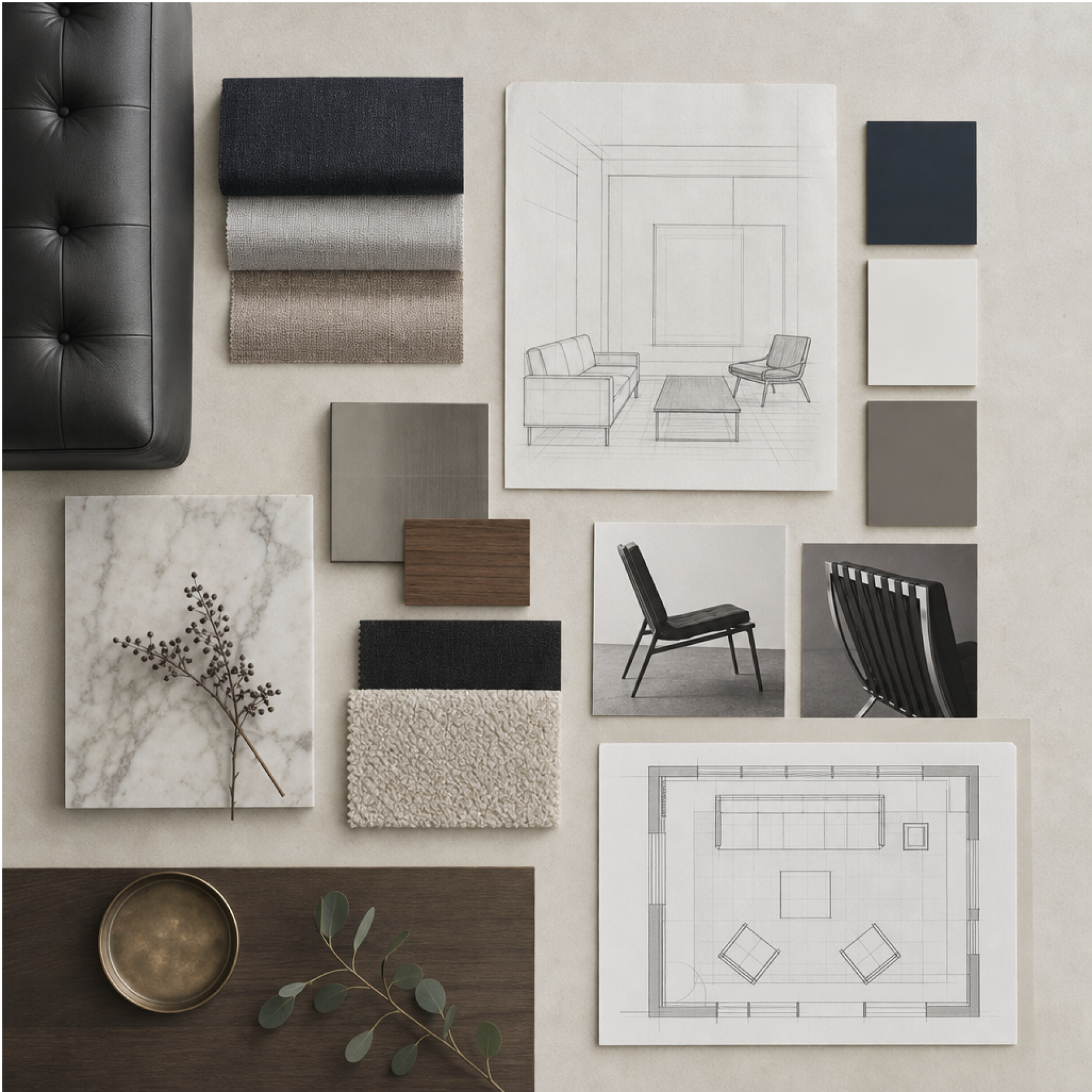
Samples are useful when a finish must sit beside timber, stone, metal, wall colour or other upholstery. A screen image rarely gives enough information about leather grain, fabric texture or metal tone. Requesting material samples early can expose a mismatch before the design is presented to a client or released for production.

Drawings and configurations deserve the same attention. Check seat heights against the table, arm widths against doorways and the overall footprint against the furniture plan. For a project with restricted access, review lifts, staircases, corridors, loading arrangements and installation routes before confirming the final selection.

  • Confirm the precise model and any product code used in the schedule.
  • Record upholstery, leather, wood and metal finish selections clearly.
  • Check dimensions against room layouts, table heights and access routes.
  • Request current lead-time information for made-to-order options.
  • Coordinate delivery and installation with site readiness and other trades.

Common specification mistakes and their consequences

One frequent mistake is treating a famous chair as a purely visual choice. A design may look suitable in a reference image but prove too large for the room, too formal for the user or unsuitable for the expected cleaning regime. Reviewing use, scale and maintenance at the start reduces the chance of a late substitution.

Another problem is separating product selection from procurement planning. A chair may be approved before the upholstery, quantity or delivery route is fully confirmed. Later changes can affect price, lead time, colour consistency and the coordination of surrounding pieces. A clear quotation should state what has been selected and identify any assumptions that still need confirmation.

Multiple suppliers can also create gaps in accountability. When branded furniture, lighting, bespoke cabinetry and specialist upholstery are ordered through separate channels, each item may be managed correctly while the overall package remains poorly coordinated. One knowledgeable contact can help identify clashes between specifications, dates, access requirements and installation sequences.

How a specialist trade furniture supplier can help

The Design Net Ltd. supports interior designers, architects, specifiers and procurement teams across London and the Home Counties, as well as projects elsewhere in the UK. Established in 1996 and led by founder Gay Mill, the company provides practical guidance on premium European furniture and lighting brands, including Knoll, alongside British-made bespoke furniture developed through specialist workshops close to London.

This two-route approach is useful when a project contains both established designs and items that need a different response. A Knoll chair may provide the right identity, performance or availability for one room, while a bespoke table, cabinet, banquette or storage piece may need exact dimensions, materials and finishes. Branded and bespoke furniture are not competing choices. The intelligent route can vary across the same project.

Support may include product sourcing, trade quotations, samples, drawings, finish advice, multi-brand order coordination, lead-time management and delivery or installation planning. Gay’s long experience with manufacturers and workshops helps identify practical issues before an order is placed, such as unsuitable proportions, incomplete finish information, factory requirements or difficult access. That foresight helps protect the original design intent when a project moves from presentation to site.

Frequently Asked Questions

The Barcelona Chair is often regarded as the most recognisable Knoll chair, but the answer depends on the design context. The Womb Chair, Bertoia Diamond Chair and Florence Knoll seating are also highly influential. For a project, suitability should be judged by scale, comfort, use, upholstery and the surrounding architecture.

Several Knoll chairs are used in commercial, hospitality and workplace settings, but suitability depends on the precise model, upholstery, maintenance requirements and project standards. Confirm current product information, applicable performance details and the intended pattern of use before approving a chair for a contract scheme.

Include the model, quantity, dimensions, upholstery or leather, frame finish, delivery address and required date. Add drawings or room layouts where clearances matter. If other furniture is being ordered, provide the wider schedule so lead times, access and installation requirements can be reviewed together.

Yes. A branded chair can establish a recognised design language while bespoke furniture resolves dimensions, storage, materials or special functions. The two routes work well together when seat heights, finishes, proportions and delivery dates are coordinated. Early drawings and samples help the complete scheme feel intentional rather than assembled.

Protect the design intent behind the selection

The most iconic Knoll chairs combine design history with practical specification questions. Choosing well means looking beyond recognition to the room’s scale, user needs, materials, programme, access and installation plan.

If you are developing a residential, hospitality, commercial or marine project, The Design Net can help compare Knoll options with other premium brands and British-made bespoke solutions. Discuss your project with a specialist trade furniture and lighting supplier and begin with the information that matters most: your brief, drawings, finishes, quantities and programme.

View all posts No more posts No previous posts