This guide compares the main routes available, explains what a capable trade furniture and lighting supplier should provide, and shows how to judge service, pricing and project control. The aim is not to replace design judgement, but to give it stronger support when a project involves multiple brands, bespoke work, complex access or demanding deadlines.
 Home link
FF&E Procurement UK: How to Choose the Right Furniture and Lighting Partner
Posted by Default Admin (28 September 2026)
FF&E procurement UK projects rarely fail because a designer cannot find attractive furniture. Problems usually appear later, when specifications are incomplete, finishes are unavailable, lead times change, deliveries arrive separately or a piece cannot pass through the building. For interior designers, architects, FF&E designers and procurement teams, the right procurement approach protects the original design intent from selection through to installation.
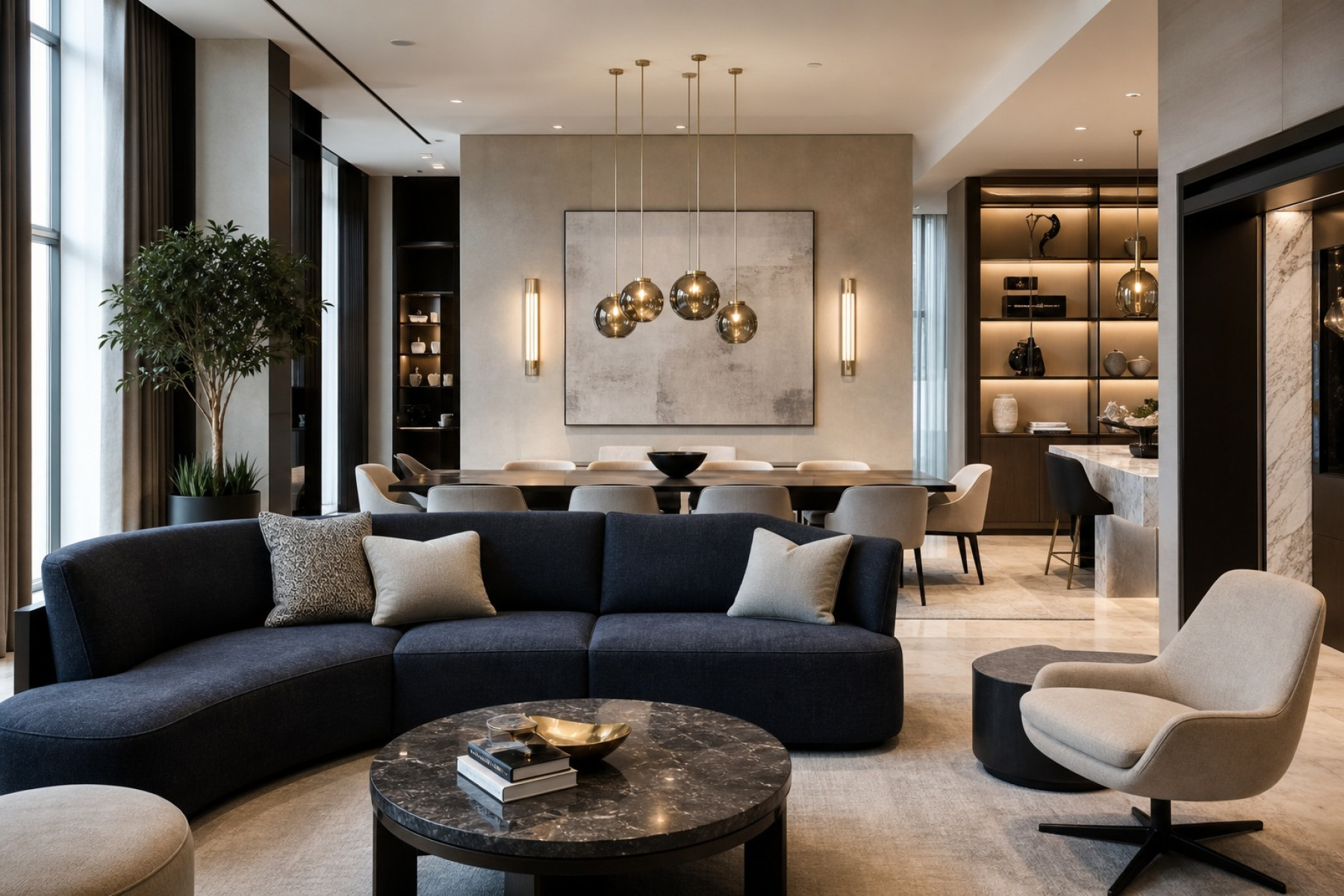
What does FF&E procurement include?
FF&E procurement covers the practical work required to turn a furniture and lighting specification into a coordinated, deliverable package. It can include product research, manufacturer communication, trade quotations, configuration checks, samples, drawings, order administration, lead-time updates, delivery planning and installation coordination.
The work sits between design and site delivery. A procurement partner may identify that a specified sofa needs a different configuration, that a finish is unsuitable for a hospitality setting, or that a table exceeds the available lift dimensions. These details can affect cost, programme and appearance, so they need attention before orders are placed.
Projects may use premium European furniture and lighting brands, British-made bespoke furniture, or both. Branded products can provide established designs, tested specifications and manufacturer systems. Bespoke pieces can solve unusual dimensions, material requirements or functional needs. They are not competing routes. The strongest schemes use each where it makes practical sense.
Which procurement route suits your project?
There is no single best procurement model for every scheme. The right choice depends on the number of suppliers, the degree of customisation, the experience within your own team and the consequences of a missed detail.
Buying directly from individual brands may work for a small project with a clear specification and one manufacturer. It can become time-consuming when several brands, workshops and delivery dates must be managed. Separate authorised dealers can provide specialist product knowledge, although the design team may still need to coordinate quotations, finishes, invoices, transport and installation across different contacts.
An independent procurement agent can offer useful administration and purchasing support. A specialist trade furniture and lighting supplier can add product judgement alongside coordination, particularly when the same contact can source branded pieces, develop bespoke work and communicate with manufacturers and workshops.
| Procurement Route | Best Fit | Watch Point |
|---|---|---|
| Direct brand buying | Small, focused specifications | Limited coordination across suppliers |
| Separate dealers | Projects needing brand specialists | More contacts and administration |
| Independent agent | Purchasing and order support | Product advice may vary |
| Specialist trade supplier | Multi-brand, bespoke or complex schemes | Check service scope and accountability |
How to compare FF&E procurement UK providers
Price matters, but a low initial figure does not show the full cost of procurement. Compare what each quotation includes, how changes are recorded, who checks dimensions and finishes, and which party takes responsibility for communication when several manufacturers are involved.
Specification and product judgement
A useful provider should be able to discuss proportions, configurations, upholstery, materials, finishes and intended use. For a high-end residence, boutique hotel, commercial interior or selected marine project, suitability can be more valuable than simply finding the first available product. Ask whether the supplier can challenge a specification constructively and suggest an alternative without weakening the design.
Samples, drawings and quotations
Samples allow the design team to check colour, texture, sheen and material relationships before approval. Bespoke furniture may also require drawings, dimension checks and design development. A clear quotation should identify product codes, quantities, finishes, delivery assumptions, taxes where relevant, installation scope and any exclusions. This makes revisions easier to track.
Lead times and accountability
Lead times can change because of factory capacity, material availability, shipping, approvals or production stages. A supplier should provide realistic information rather than presenting an unqualified date. Ask how updates are reported, how late changes are handled and whether orders are coordinated to reduce fragmented deliveries.
Access and installation planning
Delivery is not complete when goods reach the building entrance. Access restrictions, loading bays, stairs, lifts, storage, protective measures and installation sequences can affect the programme. A provider with experience in London and the Home Counties should ask for relevant site information early, particularly where buildings have restricted access or tight delivery windows.

Common mistakes that create avoidable risk
Many procurement problems begin before an order is issued. The most frequent mistake is treating a product image or basic schedule as a complete specification. A visually correct item may still have the wrong dimensions, upholstery grade, electrical requirement, seat height or fixing detail.
Another mistake is approving finishes without physical samples. Screens and printed images cannot reliably show a textile, timber, stone, lacquer or metal finish under the lighting conditions of the finished interior. Samples should be reviewed alongside adjacent materials, not in isolation.
Teams also lose time when they manage each supplier separately without a shared procurement record. This can produce conflicting quantities, duplicated delivery charges and missed dependencies. Changes should be documented, approvals dated and responsibility made clear. A late design revision may be manageable at quotation stage but expensive once production has begun.
- Confirm dimensions, configurations and finish codes before placing orders.
- Check factory requirements, electrical details and fixing information where relevant.
- Review access routes, storage and installation conditions before delivery dates are fixed.
- Separate confirmed lead times from provisional estimates.
- Keep one current schedule covering products, quantities, costs, approvals and status.

What professional support should look like
Professional support should reduce uncertainty without removing the designer’s control. The provider should listen to the brief, clarify priorities and make decisions visible. That includes explaining why a branded item may be more suitable in one area, while a British-made bespoke piece may solve a dimensional or functional problem elsewhere.
The Design Net Ltd. has supplied trade furniture and lighting since 1996, supporting interior designers, architects, specifiers and procurement teams across London and the UK. Its work combines premium European brands including B&B Italia, Maxalto, Knoll, Gloster, Contardi, Crassevig and Traba with bespoke furniture developed through specialist British workshops close to London.
Led by founder Gay Mill, the business provides product sourcing, specification guidance, trade quotations, samples, multi-brand order coordination, lead-time management, delivery and installation planning. That practical experience helps identify risks before an order is placed, while keeping the design intent central from the first quotation through to site delivery.
Frequently Asked Questions
Procurement should begin once the design direction and main specifications are sufficiently developed to test availability, finishes, dimensions and lead times. Early involvement is especially helpful for made-to-order furniture, bespoke pieces, lighting requirements and projects with restricted access or fixed installation dates.
Neither route is automatically better. Branded furniture may suit a requirement for an established design, while bespoke furniture can resolve unusual dimensions, materials, storage needs or detailing. A knowledgeable supplier should compare both routes and recommend the most suitable option for each part of the project.
A quotation should identify products, quantities, configurations, finishes, prices, delivery assumptions and any installation or access charges. It should also show exclusions, validity dates and provisional information. For bespoke work, request drawings, material details and the approval stages needed before manufacture starts.
One accountable contact can simplify quotations, samples, order updates and delivery planning across several manufacturers. This can reduce duplicated administration and make dependencies easier to track. It does not remove the need for specialist manufacturer knowledge, so ask how the supplier manages brand relationships and technical details.
Protect your design intent from specification to installation
The right FF&E procurement UK partner gives your team more than access to products. It provides practical judgement, clearer information and accountability across the details that can otherwise create costly surprises.
Send us your brief to discuss your project, request a quotation or arrange a conversation about branded and British-made bespoke furniture for your next scheme.
Get in touch
Connect with us today and explore the ways in which we can support you.